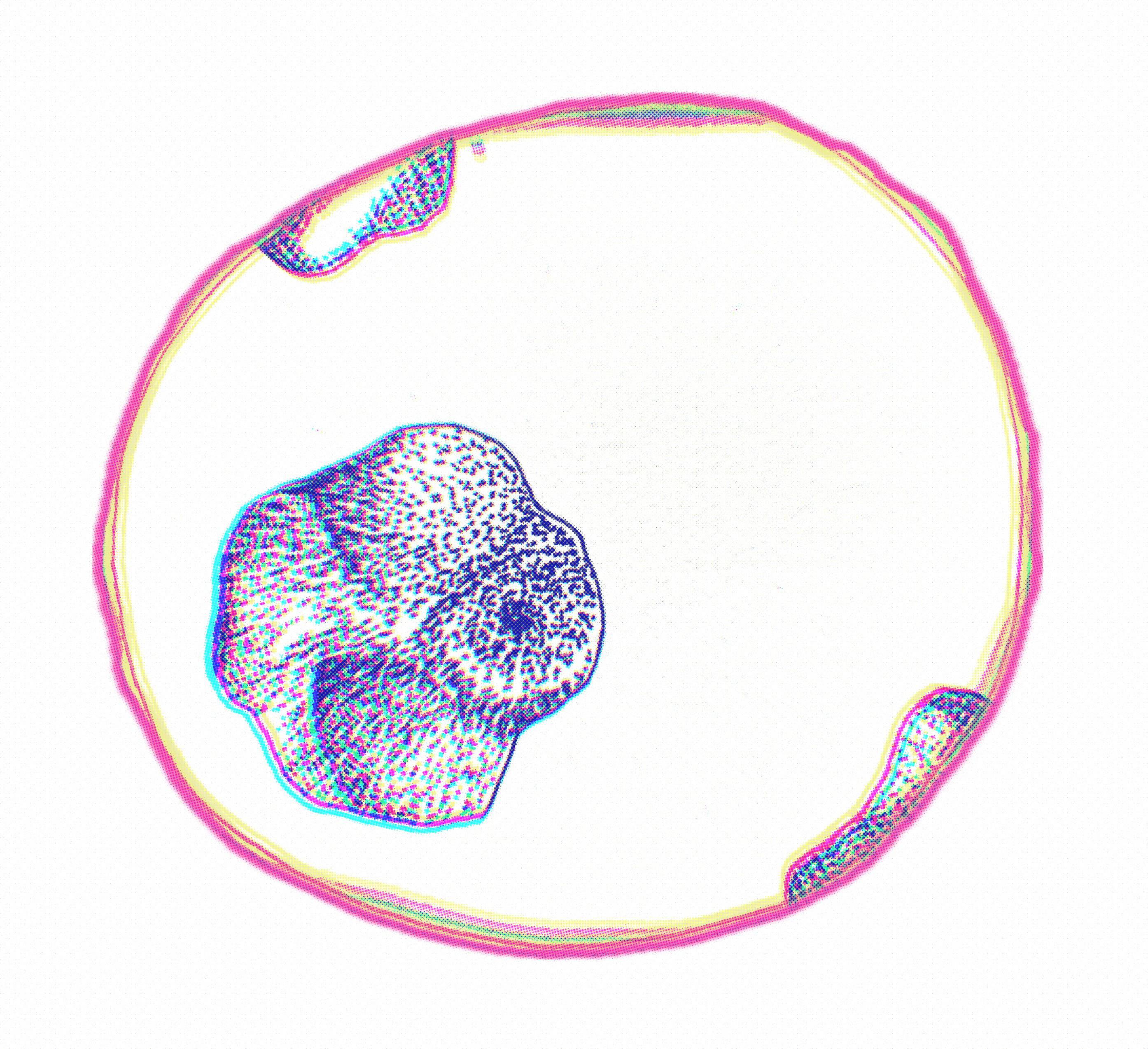
Once upon a time, Hexamita lived in the Gut with their relatives but felt like something was missing. They tried to leave and find a new home. But each time they left, they got tired and fell asleep. They would wake up back in the Gut, with only a vague dream of a blue lake...
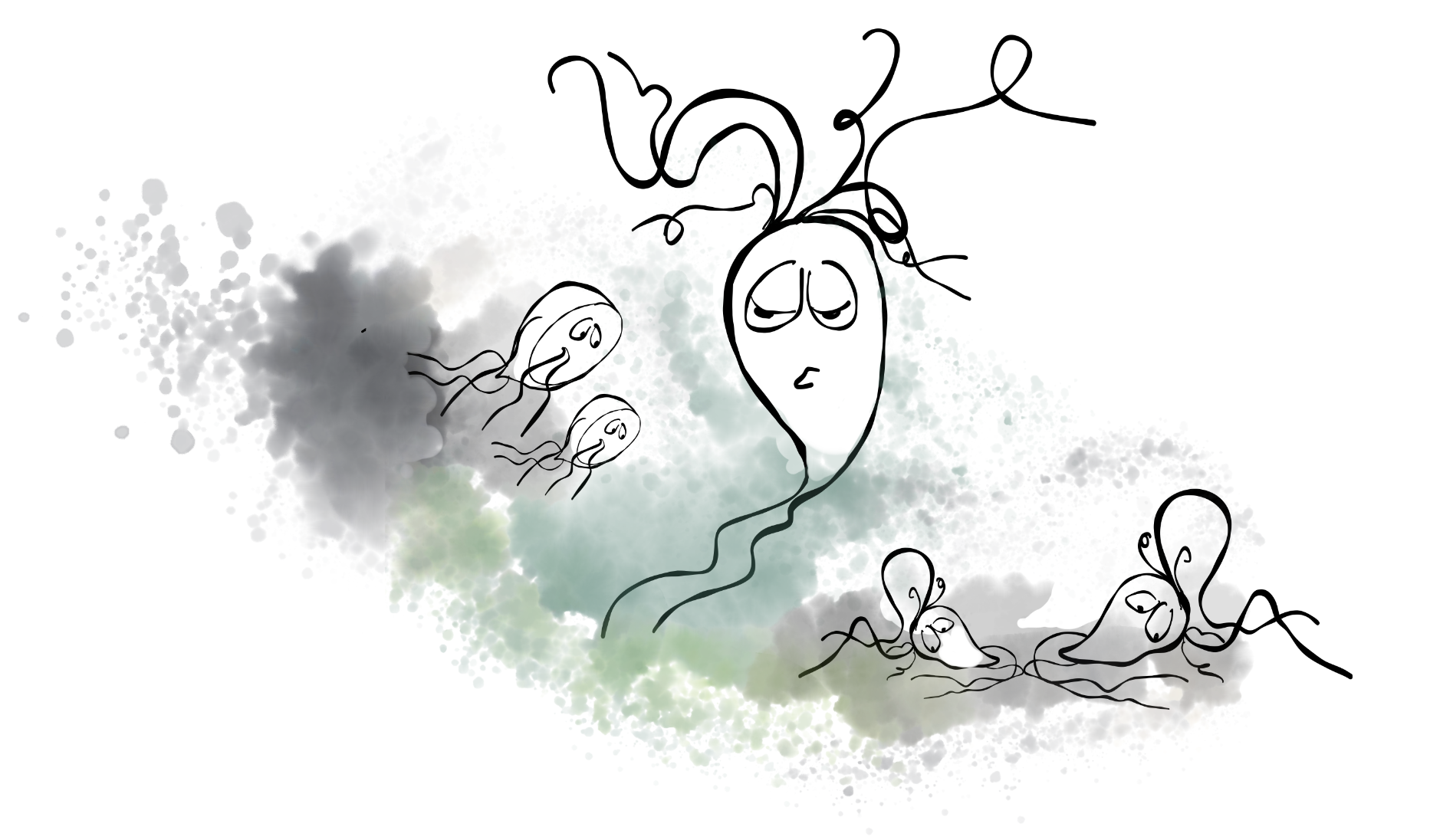
A scientist scooped a spoonful of mud
from a quiet pond.
Curious, they wondered
what secrets might be hiding inside.
They leaned in closer and discovered
a tiny creature,
darting through the water with enormous,
whip-like flagella.
Where could something like this have come from?
They leaned in even closer,
and the creature whispered
it had traveled from very,
very far away.
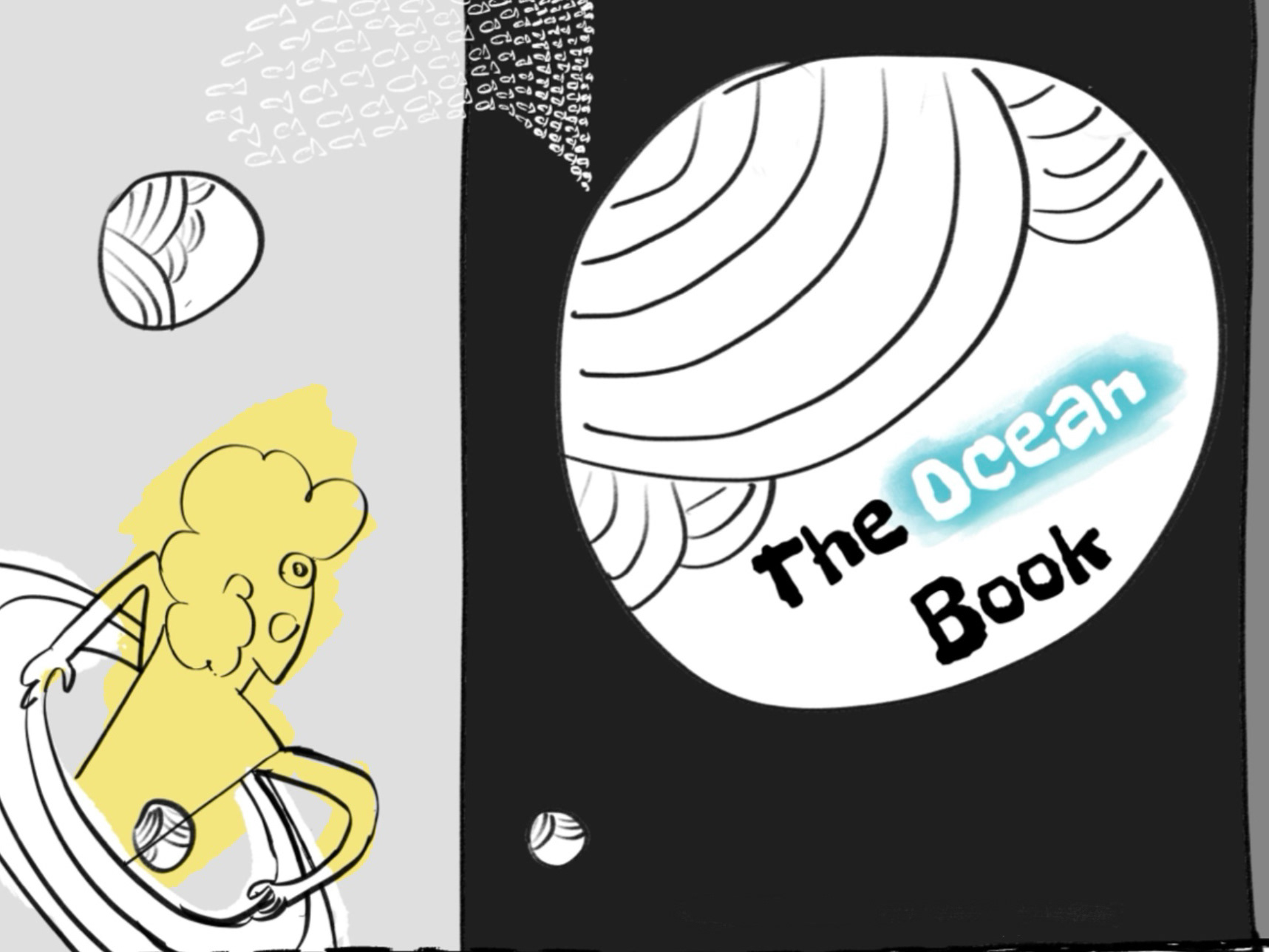
So they opened an ancient book
and began reading
its story
from the beginning.
Deep within the center of its body,
something unusual
caught their eye.
Gene number 79,341 appeared not once,
not twice,
but ten times over.
Ten copies of the same gene.
Shouldn't that make it gene 79,351 by now?
And if every gene comes in pairs,
how does a pair ever become ten?
2, 4, 8, 16
the math makes sense until suddenly it doesn't.
How did it stop at 10?
Does this body divide on its own,
or does it need a partner to do so?
If it divides alone
if there is no partner,
no exchange,
no shuffling
then every mistake gets passed down,
quietly,
inevitably,
building up
like dust in a forgotten room.
That is Muller's ratchet.
Once it starts turning,
it does not stop.
The only destination is
extinction.
Unless
unless the genes could be reshuffled. Mixed up.
Repaired.
That is what meiosis does.
It reaches into the pile of
broken things
and finds a way
to put them back together.
Could that be the reason sex exists at all?
But Hexamita
is alone
in its pond.
If it wanted to swap its worn-out genes,
who would take them?
Who would willingly trade
with something carrying so much damage?
There was,
however,
an old friend nearby.
A bacterium.
And bacteria, as Hexamita once learned,
are extraordinarily
generous
with their genes.
They pass them around freely,
to neighbors,
to strangers,
to anyone in need.
That is their
ancient wisdom
share,
and survive together.
What if Hexamita could borrow
just a
gene or two?
What if a small loan
from a generous
bacterium
could patch up
what had gone wrong?
But even if
the bacterium was willing
would it actually work?
Hexamita
was not a bacterium.
It wasn't quite a proper
eukaryote either.
It existed
somewhere in between,
belonging
fully
to neither world.
And still,
the copies kept coming.
Its body remained unchanged
on the outside,
but deep within,
the core kept swelling.
More copies.
Then more.
Redundant,
overlapping,
crowding each other out.
Hexamita never understood why.
All those extra copies
did not make it stronger.
They made it
slow.
They made it
sloppy.
They turned it into
a poor parasite,
a shadow of
its sharp and thriving ancestors
who knew exactly
where to go
and
how to hold on.
Hexamita could never quite hold on.
Every life cycle
it washed back into the pond,
starting over,
waking up
in the same
cold water.
It didn't mind the pond,
not really.
But something gnawed at it
a hollow,
persistent hunger
that the pond
could never fill.
Something was missing.
Something
that would finally make it
feel whole.
And so, despite everything,
Hexamita set off again.
Deeper into
the gut.
Searching for the right corner,
the right surface,
the right place
to finally become
what it was always supposed to be
a good
parasite.
"I have to let go of these copies,"
it told itself
quietly.
"They are weighing me down.
Giardia
splits into two
in an instant clean,
efficient,
effortless.
But my core is so swollen,
so stuffed
with extras,
that just keeping track of them
takes
everything I have."
And then,
a quieter thought crept in.
What if
I am not what I think
I am?
What if somewhere in my past
there is a
different ancestor
one who also carried a bloated core,
one who also
never
quite fit?
I have eight flagella, just like the others.
Two cores,
just like the others.
I look like I belong.
But
I cannot live in the pond.
And
I cannot live in the gut.
I want
a place that is neither.
I wish there were a place
without being squeezed inside
or stuck underneath,
or slipping over
A place where I can simply exist
...
Perhaps the pond was not the end. Perhaps the gut was not the answer.Hexamita was still swimming. Still searching. The story had only just begun.
Wanna see what Hexamita looks like?